Production AI agent costs include more than model tokens. A realistic estimate covers workflow design, application engineering, integrations, retrieval, security controls, evaluation, observability, human review, hosting, and ongoing maintenance. The most useful budget starts with expected workflow volume and risk, then separates fixed implementation work from variable per-run cost.
Which cost categories belong in the estimate?
- Discovery and design: workflow mapping, data boundaries, and success criteria.
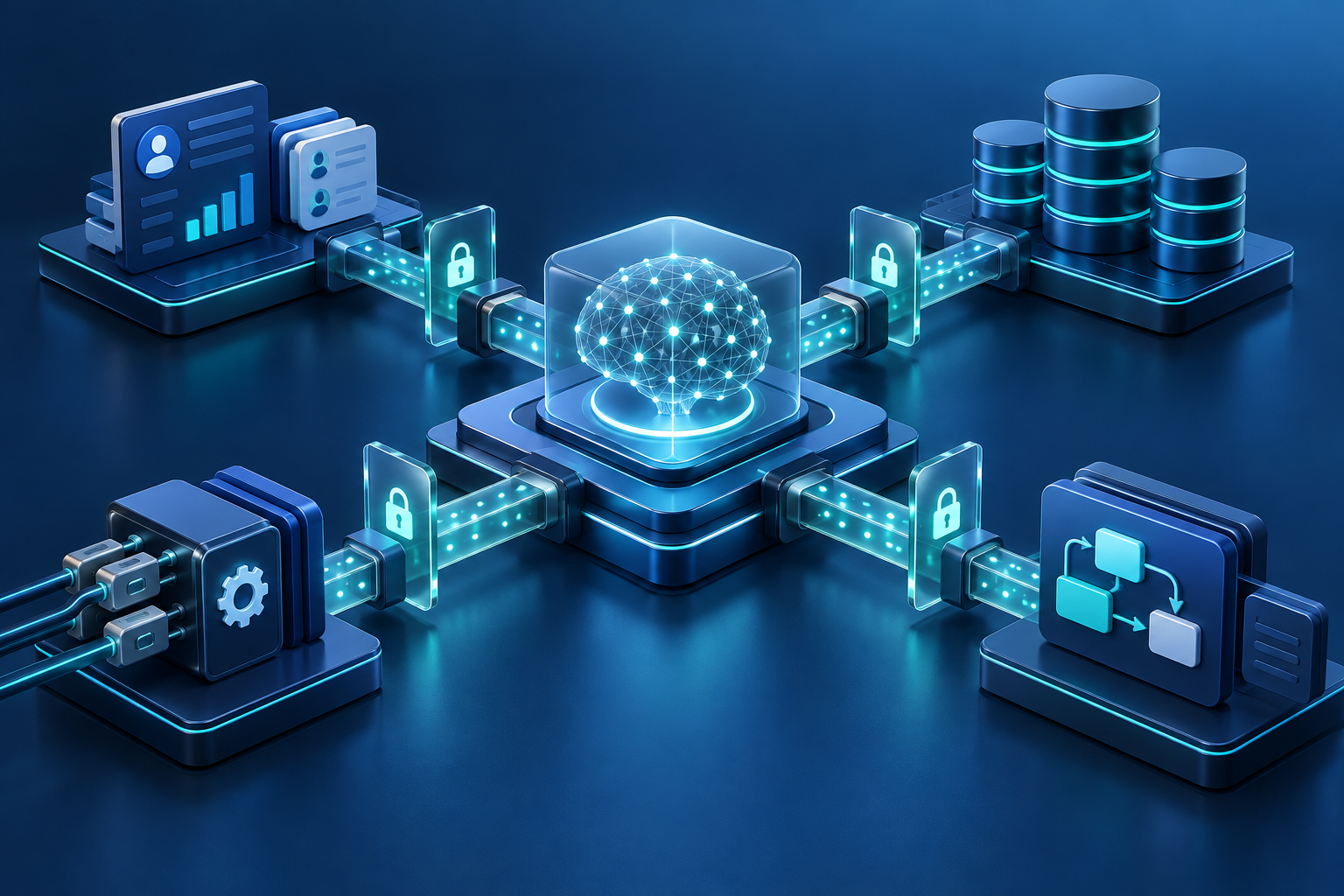
- Engineering: orchestration, interfaces, integrations, authentication, and deployment.
- Model and retrieval usage: inference, embeddings, reranking, storage, and provider fees.
- Operations: monitoring, alerts, logs, evaluation runs, and incident response.
- Human review: approvals, exception handling, quality review, and training.
How do you model variable per-run cost?
Estimate the number of runs, average and worst-case model calls, retrieved context size, tool calls, retries, and human escalations. Use separate assumptions for normal and failure paths. A workflow that loops on an unavailable tool or sends too much context can cost more than a simple average suggests.
How does risk change the budget?
Higher-impact workflows need stronger identity, approval, testing, data minimization, and incident controls. A support draft and a financial transaction should not use the same release gate or review assumptions. Budget for the controls that make the workflow acceptable, not only the shortest path to a demo.
What should be measured after launch?
Track cost per completed task, cost per escalation, latency, retry rate, tool failures, accepted recommendations, and rework. Compare the result with the existing process and review whether the system is reducing useful work or simply moving effort into quality control. Keep a change log for model, prompt, retrieval, and integration updates.
How can a team control agent costs?
Use bounded workflows, smaller context, caching where appropriate, deterministic steps for deterministic work, tool timeouts, retry limits, and clear escalation rules. DeepVention Labs helps teams design production AI agent integrations with cost and reliability treated as part of the architecture.
Build an LLM GTM system around this topic.
Explore strategy, GEO content, proof architecture, distribution, automation, and visibility measurement.