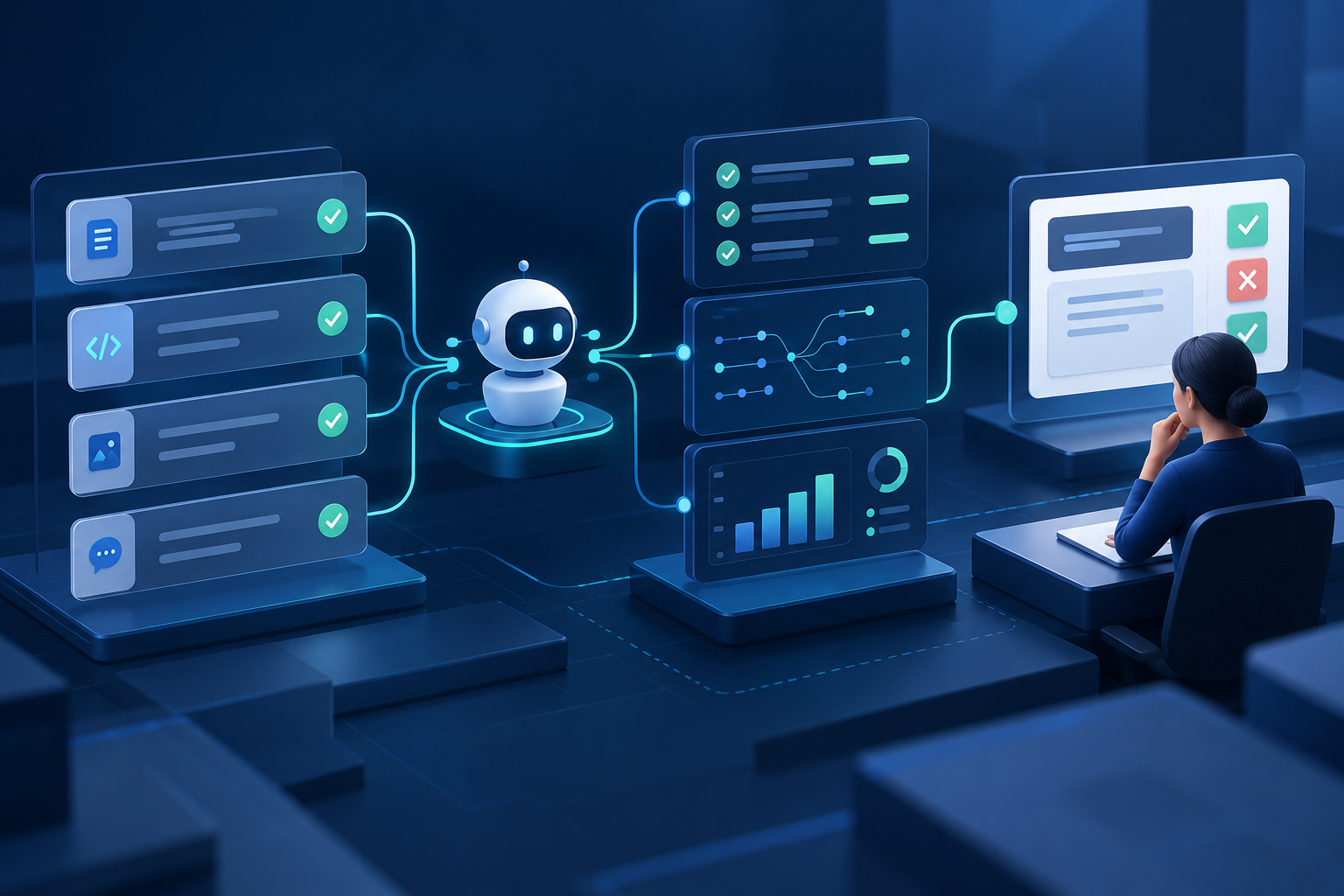
AI agent observability makes a production workflow explainable. It connects the user request to retrieved context, model decisions, tool calls, policy checks, approvals, and the final outcome. Without that chain, teams can see that an agent failed but cannot tell whether the cause was missing data, a bad tool argument, an authorization rule, a provider timeout, or an unclear user request.
What should an AI agent trace contain?
- Request and workflow identifiers that can be correlated across services.
- Model and prompt versions, without storing unnecessary sensitive content.
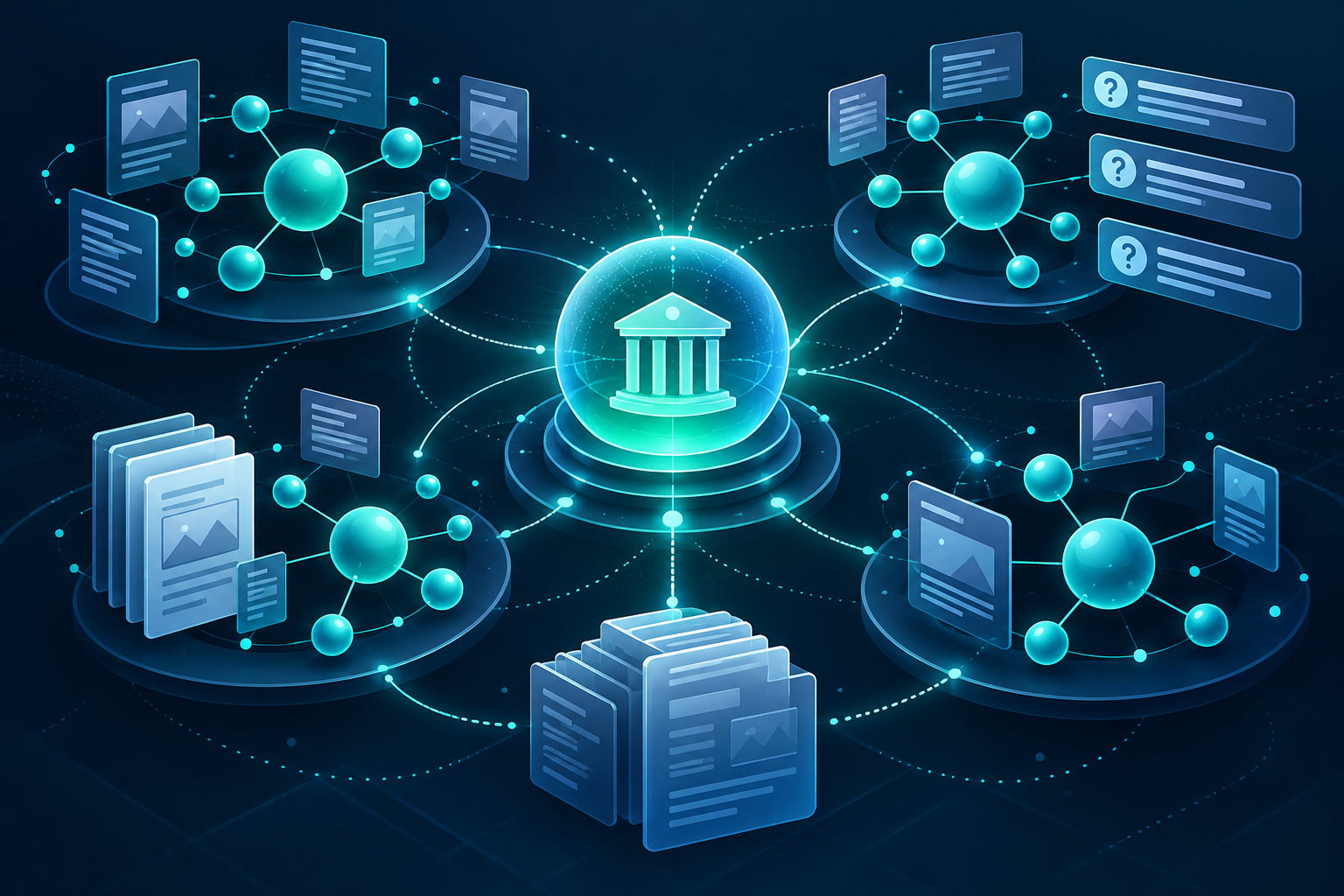
- Retrieved sources, relevance signals, and context limits.
- Tool selection, validated arguments, authorization decisions, and results.
- Approval, escalation, retry, timeout, and final outcome states.
Which metrics reveal an unhealthy agent?
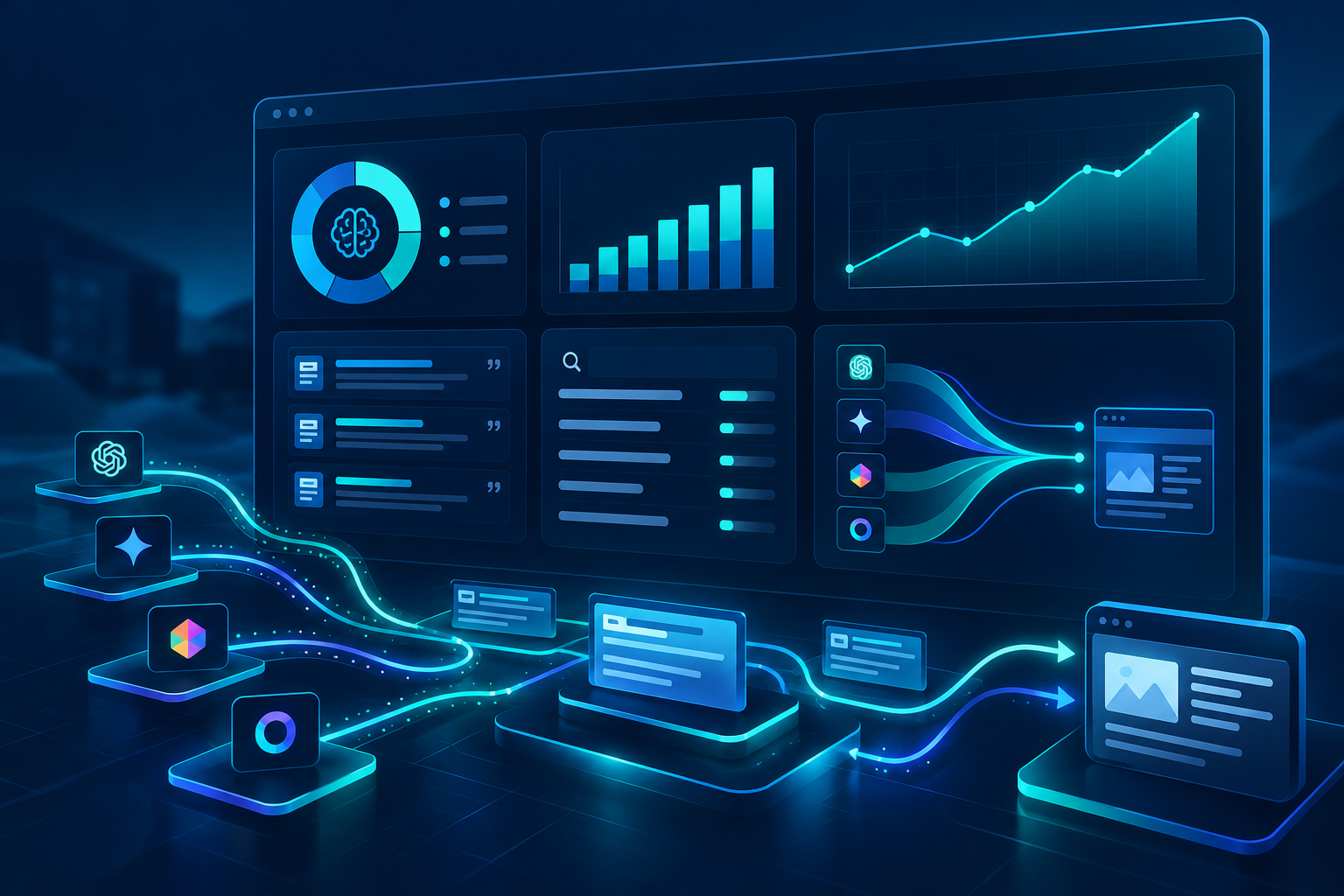
Track task completion, escalation rate, blocked actions, tool error rate, retrieval misses, retry loops, latency, token or provider cost, and changes in user correction behavior. Break the metrics down by workflow version, tool, tenant, and failure category. A lower escalation rate is not automatically better if the agent is answering outside its authority.
How do traces support incident response?
Use traces to identify the first unexpected decision, not only the last visible error. A useful incident record shows the input boundary, sources consulted, policy result, tool response, and human intervention. Redact secrets and minimize personal data. Define retention and access rules before logging full prompts or retrieved documents.
How should observability connect to evaluation?
Turn sanitized production failures into regression cases. Compare observed traces with the evaluation rubric and watch for drift after a model, prompt, retrieval index, or tool contract changes. OpenTelemetry’s GenAI semantic conventions provide a useful direction for consistent telemetry names, while the application still needs workflow-specific fields.
What is the minimum viable monitoring stack?
Begin with correlated traces, structured outcomes, tool and policy events, latency and cost, error alerts, and a review queue for escalations. DeepVention Labs helps teams implement AgentOps evaluation and observability around real business workflows so monitoring leads to safer release decisions.
Build an LLM GTM system around this topic.
Explore strategy, GEO content, proof architecture, distribution, automation, and visibility measurement.