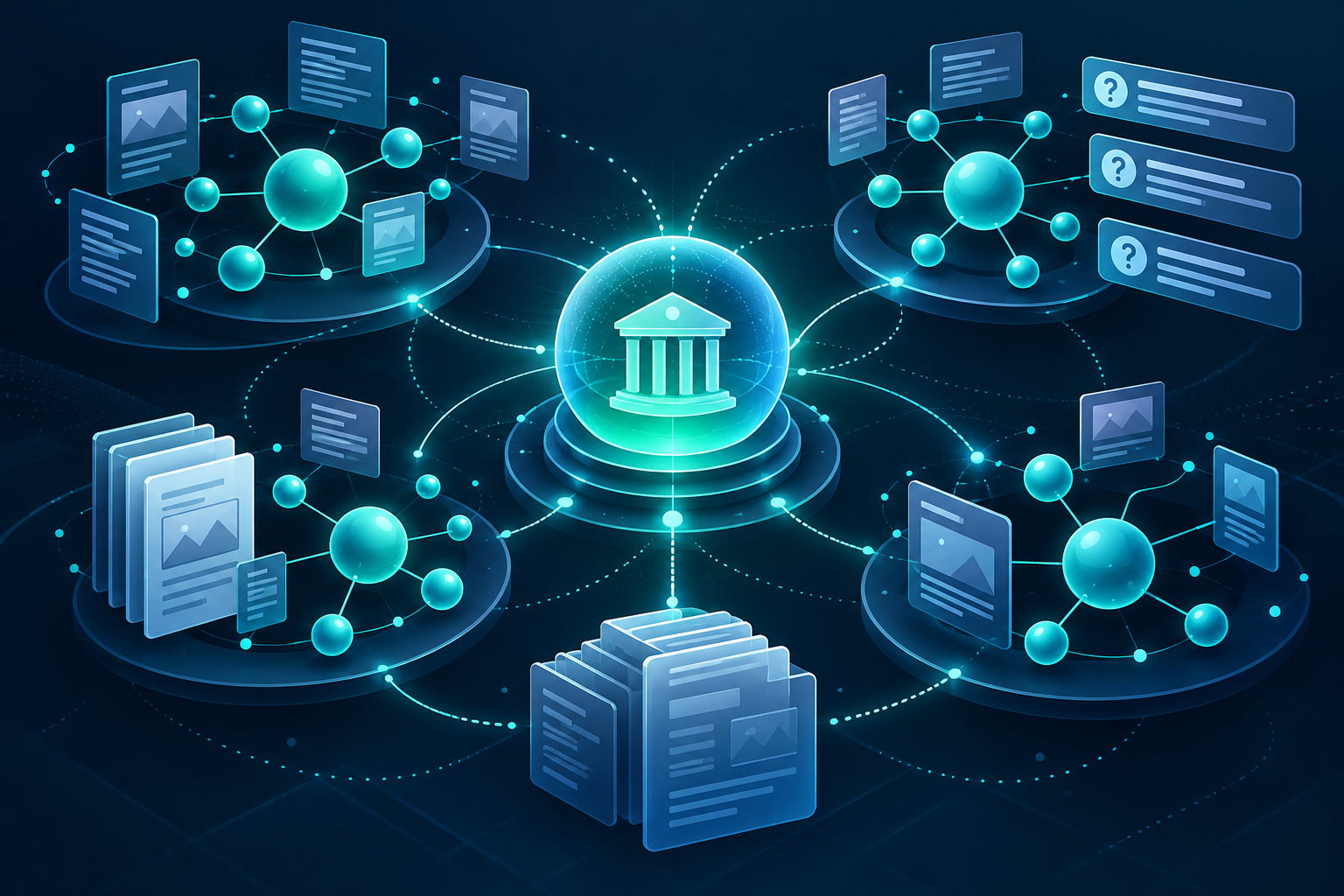

AI governance is the operating system around an AI product. It defines who owns the system, what data it may use, which tools it may call, how behavior is evaluated, when a human must intervene, and what evidence is retained when something goes wrong. A policy document is useful, but governance becomes real only when those decisions are implemented in architecture, workflows, and release operations.
Assign ownership and define the system boundary
Start with an inventory of models, prompts, retrieval sources, tools, data stores, integrations, and user-facing surfaces. Assign a business owner and a technical owner for each system. Record the intended task, affected users, data categories, possible side effects, and the conditions that require review or disablement.
Control data access and tool authority
Least privilege applies to AI workflows just as it applies to other software. Retrieve only the context needed for the task. Scope access by user, tenant, role, and purpose. Give tools narrow operations and validate every argument before execution. Separate low-risk reads from writes that change durable state, and require an approval record when the business risk calls for one.
Evaluate the behaviors that matter
Governance needs evidence, not only intentions. Create representative cases for normal work, ambiguous requests, conflicting sources, unauthorized actions, prompt injection, sensitive-data requests, provider failures, and repeated events. Score the behaviors that affect the workflow, such as grounding, correct tool use, authorization, escalation, latency, and cost. Keep regression cases when a model, prompt, policy, or data source changes.
Monitor production and preserve useful evidence
Operational monitoring should show what the system attempted, which tools it used, which policy decision was applied, and why a run succeeded, escalated, or failed. Redact or minimize sensitive data according to the approved policy. Watch for repeated authorization failures, unexpected tool patterns, retrieval misses, approval rejections, and changes in latency or cost.
Turn governance into release decisions
A practical release gate asks whether the workflow has an owner, tested permissions, representative evaluations, useful traces, a rollback or disable path, and a human escalation route. DeepVention Labs implements AI security, guardrails, evaluation, and observability around production systems. Technical controls can support governance objectives, but they do not by themselves establish legal compliance or eliminate business risk.
Build an LLM GTM system around this topic.
Explore strategy, GEO content, proof architecture, distribution, automation, and visibility measurement.